ServicesRoof Replacement
Roof Replacement in Piedmont, Scheduled Around Your Week
We strip your old roof to the deck, fix what we find underneath and install a new system with fresh underlayment, flashing and ventilation. Before work starts you know the likely start date, how many days it should take and what happens if weather pushes it back.
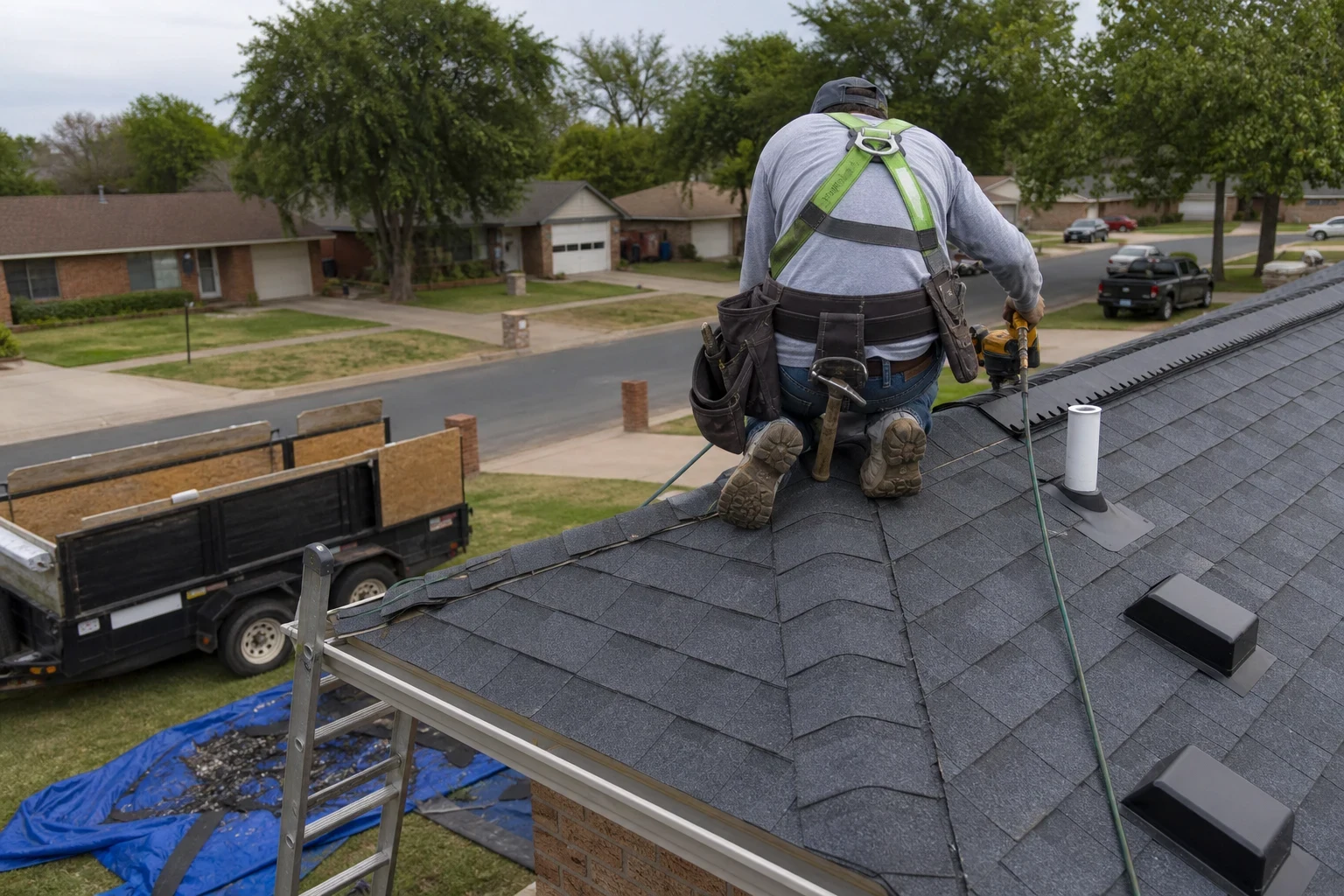
When Replacing Beats Patching Again
Shingles age together, not one at a time. The asphalt hardens, the granules that block sunlight rinse down into the gutters, and the seal strips that keep each row flat stop holding. When that has happened over most of the roof, fixing one leak only sends the next one a few feet away.
When the trouble is confined to a handful of shingles, one split pipe boot or a single worn valley, a roof repair is usually the smarter choice, and we'll say so. If you can't tell which situation you're in, a roof inspection gets you photos and a straight answer before you commit to a full replacement.
If a new roof is the right move, most people's biggest concern is the upheaval. That's why we schedule around an actual stretch of good weather, give you an arrival window for every work day and call the moment anything shifts.
Everything a Full Replacement Covers
- Tear-off to bare decking
- All the old shingles, felt and nails are removed. Laying new shingles over old ones hides decking problems and traps heat, so we start the new roof on clean wood.
- Decking inspection and repair
- Once the deck is open, we walk it to find soft, separating or rotted sheathing, most often at the eaves, in valleys and around past leaks. Those pieces are cut out and replaced so every new nail lands in solid wood.
- Underlayment plus leak barrier
- The whole deck gets synthetic underlayment. Self-adhered leak barrier goes in the valleys, along the eaves and around every penetration, the spots where water pools and wind drives rain uphill.
- Fresh flashing, drip edge and boots
- We put in new step flashing, counter flashing and rubber pipe boots instead of reusing the old ones. On an older roof, leaks tend to start at these joints rather than out in the open shingles.
- Attic airflow in balance
- Soffit intake is balanced against ridge exhaust. When the attic can move air, it stays cooler in summer and drier in winter, and the shingles and decking last longer for it.
- Debris removal and nail sweep
- Old material goes straight into a trailer or dumpster during the job. To finish, we roll magnetic sweepers across the driveway, flower beds and lawn to catch loose nails.
Signs Your Roof Is Ready to Be Replaced
Granules piling up in the gutters
Dark grit at the downspouts means the protective layer is wearing off. Bare asphalt underneath ages fast in summer sun.
Curling, cupping or cracked shingles
Edges that lift or centers that sink are signs the shingles have lost flexibility. Stiff shingles crack and blow off in the next strong wind.
Tabs lifting after every windstorm
When the sealant strips fail across the roof, wind starts peeling shingles back. Replacing a few at a time stops working once the whole roof has lost its bond.
Soft spots or a wavy roofline
A deck that gives underfoot or sags between rafters usually means long-term moisture. That needs to be opened up, not covered.
Widespread hail bruising
If hail has cracked the mat on most slopes, our storm damage repair page explains how we document it before you talk with your insurer.
A string of repairs in a few years
Several leaks in different spots point to a roof at the end of its life. At that stage the repair money is better put toward a new system.
How the Job Runs, From First Visit to Final Walk
- 1
Measurements and a written scope
We measure each slope, check pitch and count layers, then look in the attic for ventilation and decking clues. You get a written scope that spells out materials and what happens if we find bad decking.
- 2
A start date you can plan around
We set a date once materials are confirmed and the forecast looks workable. You get the expected number of days and an arrival window for the crew each morning.
- 3
Tear-off and dry-in
Tear-off happens one section at a time, sized so the crew can cover it again before leaving. Decking repairs, leak barrier and underlayment go on that same afternoon, so an overnight storm does not reach the inside of your home.
- 4
Installation and flashing
Starter strip, shingles, flashing and ridge vent go on in order, nailed to the manufacturer's pattern. If wind or rain stops work, we tell you that day and give you the new plan.
- 5
Final walk and cleanup
We walk the roof and the yard with you, show you photos of the deck and flashing details, and finish the magnet sweep before we pack up.
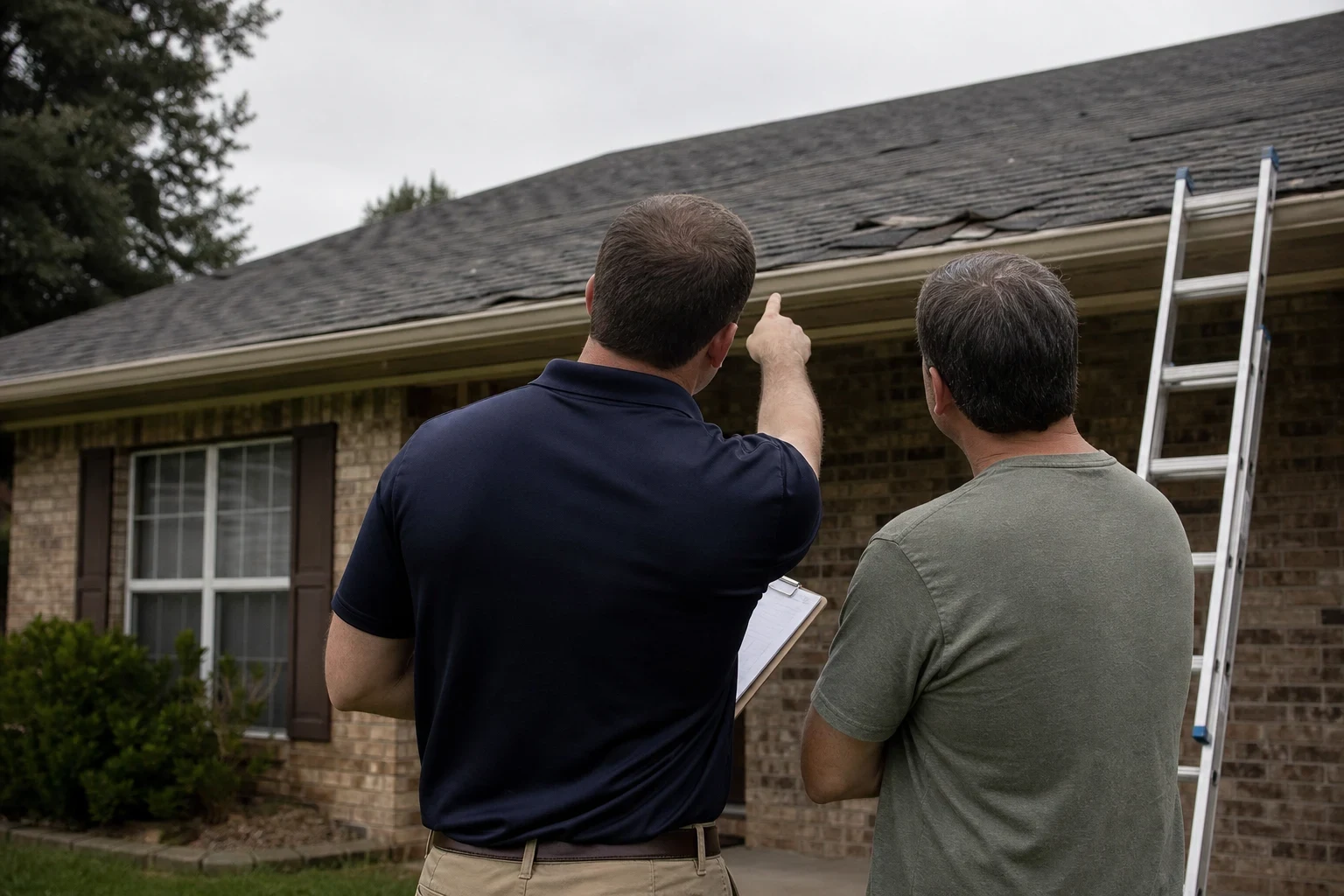
What Drives the Price of a New Roof
We don't quote a replacement until we've measured every slope and checked the attic, since two roofs that match from the curb can hide different layer counts, pitches and decking. The items below are what raise or lower the total. Each gets its own line in the written scope, so you see where every dollar goes before the crew starts.
- Roof area and slope
- Every added square means more shingles, more underlayment and more labor. Steep slopes require roof jacks and harnesses, and the crew moves slower on them.
- Old layers and decking
- A double layer of old shingles takes more time to strip and haul away. Soft decking is replaced at a per-sheet price, and you get a photo of each sheet we swap.
- Materials you choose
- Standard architectural shingles, impact-rated products and better underlayment each carry a different price. We walk you through what each one gets you, and you pick.
- Flashing, ventilation and trim
- Chimneys, skylights, dormers and multiple valleys all add flashing work. If the attic needs more airflow, adding or fixing vents becomes part of the job too.
- Permits and site access
- When the city requires a permit, we pull it and the fee is included. A narrow lot or a short driveway can change how we handle debris.
Common Questions About a New Roof
Something not covered here? (572) 231-8302
How many days does a reroof take?
A single-story house with one layer of shingles usually needs one or two working days. Bigger houses, steeper slopes, a second layer or extensive decking work can push that to three days or longer. You hear our estimate at the first visit, and we revise it if the tear-off uncovers something.
What if rain shows up partway through?
We only strip as much roof each morning as the crew can close back up by evening, so no bare wood sits open overnight. When the forecast changes, we tell you right away and move the remaining days instead of hurrying the job.
Does someone have to stay home during the work?
Not all day. We just need someone we can reach by phone, a clear driveway for the trailer, and any cars pulled out of a garage that sits under the work area. It gets loud and the house may shake a little, so pets tend to do better in a back room.
Can the new shingles go on top of the old layer?
We advise against it. An extra layer covers up soft decking, puts more weight on the framing and traps heat under the new shingles. Tearing everything off lets us repair the deck and swap out the flashing, where a lot of leaks begin.
Can hail damage go toward the cost of a new roof?
Possibly, depending on your policy and what the storm did. We take photos and explain the damage we see, and the adjuster decides coverage. Our storm damage repair page goes through that process step by step.
Is it smart to do the gutters at the same time?
When gutters sag, drip at the seams or pull off the fascia, replacing them right after the roof means the new drip edge doesn't get disturbed later. We can check them at the estimate visit, and our gutters page lays out the options.
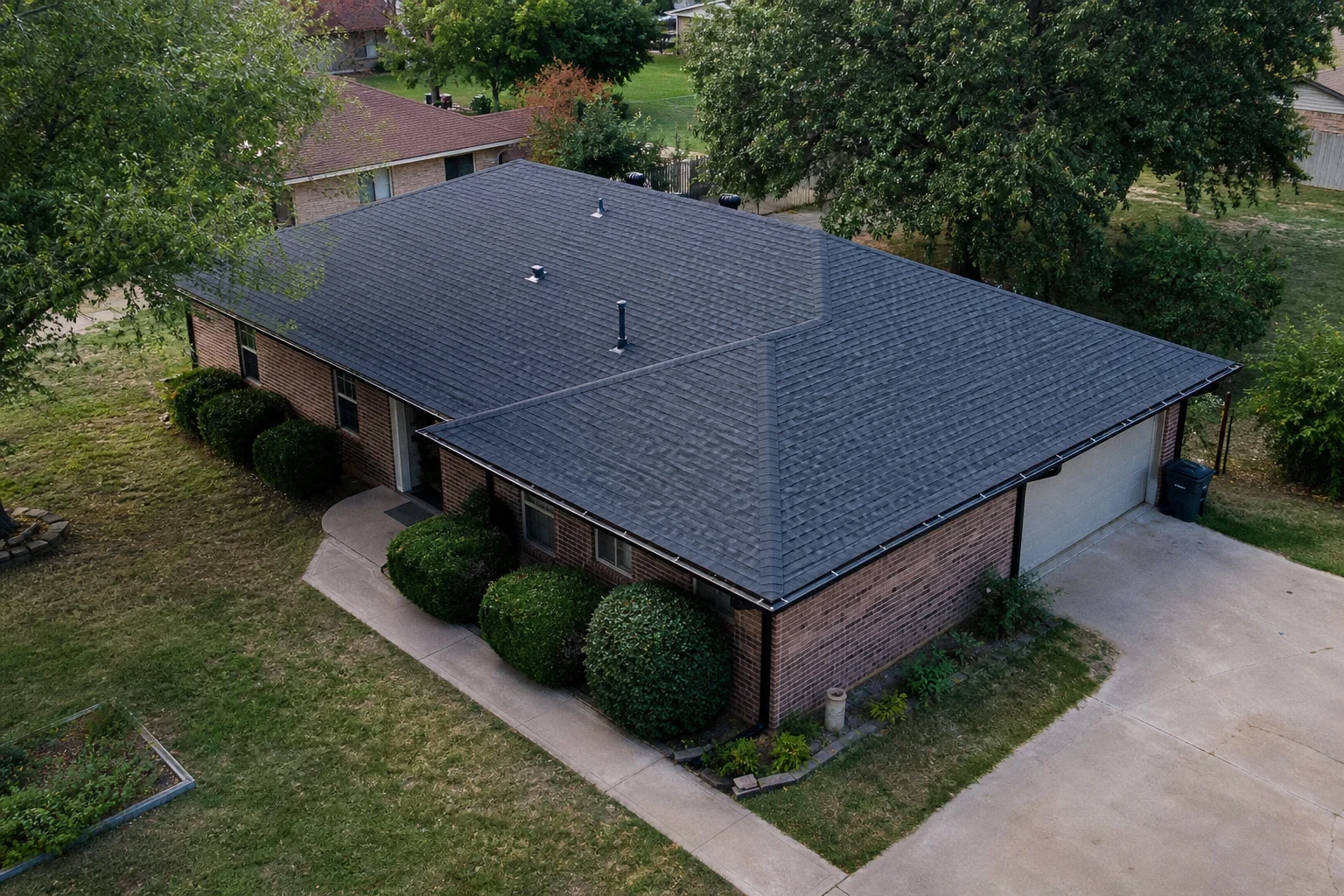
Ready to Put a Start Date on the Calendar?
Tell us about your roof and when you would like the work done. We will set up a visit, measure it properly and give you a realistic timeline along with the written scope.