ServicesRoof Repair
Roof Repair in Piedmont With a Date You Can Count On
Most leaks start at a few square feet of failed flashing, a cracked pipe boot or wind-lifted shingles. We trace the water to where it actually enters, repair that spot properly and give you an arrival window before we ever pull into your driveway.
When Repair Is the Right Call
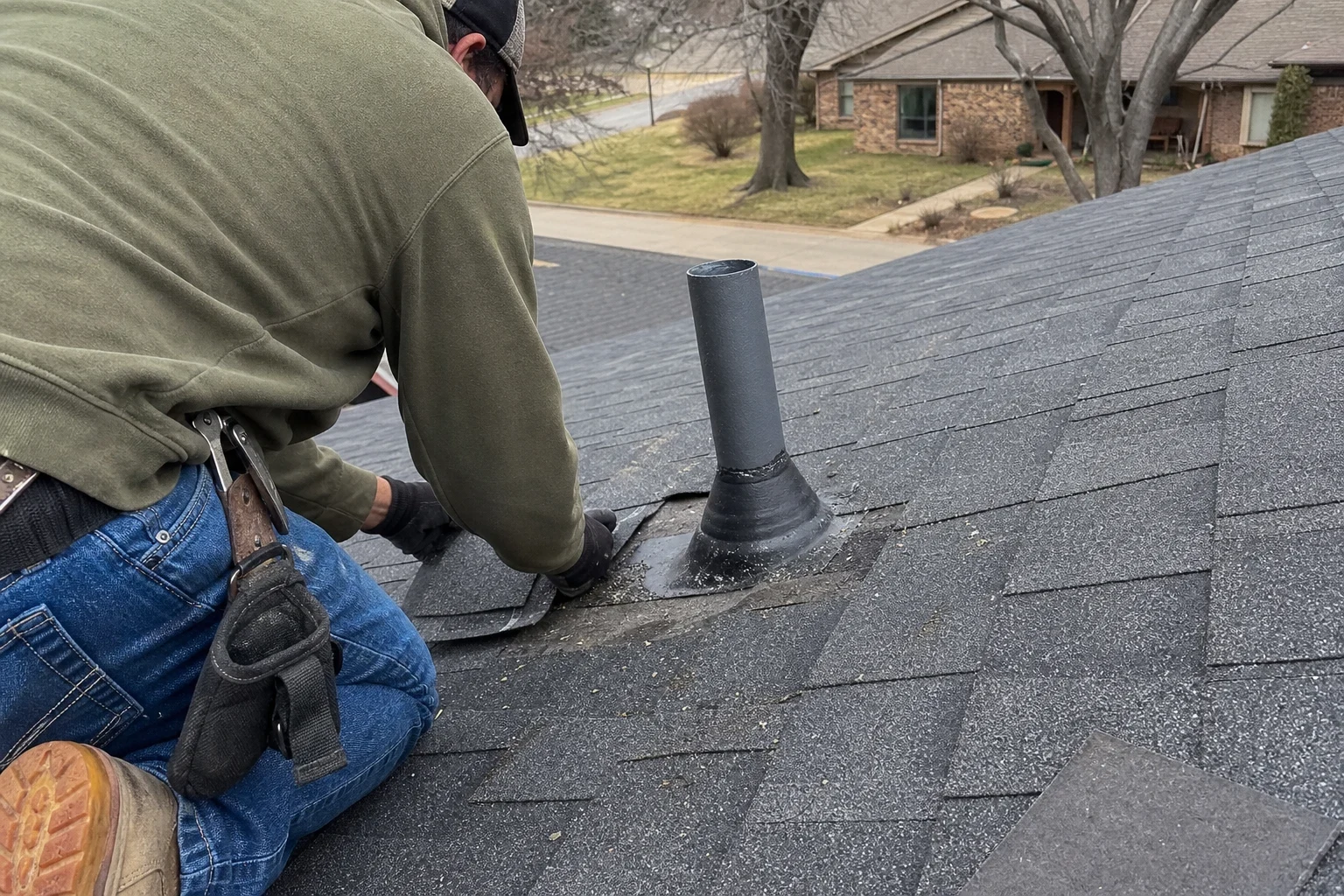
A roof rarely fails all at once. Water usually finds one weak point: a sealant joint that dried out, a neoprene collar split by years of UV, or a tab that a strong gust folded back and broke the seal strip. If the rest of the field is sound and the decking underneath is dry, fixing that one point is the sensible move.
Repair stops making sense when shingles are brittle across the whole slope, granule loss is widespread or leaks keep showing up in new places. In that case we will tell you so plainly and explain what roof replacement would involve, so you can decide with the facts in hand.
We also tell you when we are coming. You get a realistic arrival window for the inspection and for the repair day. If wind, rain or a longer job ahead of yours changes the plan, we call you before the window starts, not after it passes.
What a Roof Repair From Us Includes
Tracking the leak from inside out
We start at the stain inside and work uphill along the decking, rafters and insulation to locate where water gets in. It can run several feet down a truss before dripping, so the area right above the stain isn't always the source.
New shingles, sealed down
We pull the damaged shingles, nail new ones within the manufacturer's nailing zone and hand-seal the tabs around them so wind can't lift them.
Flashing fixes
Step flashing on walls, counterflashing on chimneys and apron flashing at dormers gets refastened or swapped out. Old caulk patches are cleaned off rather than buried under more sealant.
Vent pipe boots and roof vents
Split rubber collars around plumbing vents rank among the most frequent leak causes we find. We put on a new boot, inspect the base flange and seal the nearby shingles.
Valley and ridge cap repair
Worn shingles in the valleys and cracked ridge caps are replaced with matching material, so water runs off the roof rather than collecting at the joint.
Replacing soft decking
When a slow leak has softened the plywood or OSB, we cut that piece out and put in new sheathing before shingling over the area again.
Clues That Your Roof Needs Fixing
Stained ceilings or blistered paint
A brown ring that spreads with every rain tells you water has reached the drywall. Fixing the source quickly keeps more of the insulation and decking dry.
Missing or folded shingles after a windy day
A fold line across a tab shows it was lifted and bent. Even once it settles back down, the seal is gone and another gust can tear it loose.
Grit collecting in the gutters
A new roof sheds a little grit, and that's normal. Large piles from an older roof, or bare black spots on the shingles, point to age or hail bruising.
Raised nails and lifted tabs
As the roof heats and cools, nails can work their way up, raising the shingle over them and opening a path for water.
Wet insulation or light showing in the attic
Small spots of light near a vent or chimney, or flattened insulation under the decking, mark where water is coming in.
How a Repair Visit Runs
- 1
Your call and a set window
Tell us what you are seeing and where. We give you an inspection window and confirm it the day before.
- 2
Inspection with photos
We check the attic and the roof surface, then show you photos of the entry point, the damaged parts and anything else worth watching.
- 3
Written estimate
You get a line-item estimate that names the parts and materials. If we find something else that needs attention, we list it separately so you can choose.
- 4
Repair day
Most repairs take part of a day. We protect landscaping below the work area, make the repair and seal everything before we leave. If rain is forecast, we call to move the date instead of opening your roof into weather.
- 5
Cleanup and recap
We pick up old shingles, sweep for nails with a magnet and send you photos of the finished repair.
What Moves the Price of a Roof Repair
Two repairs that look alike from the ground can cost very different amounts once we see what is underneath. We price after the inspection, in writing, so you know the number before any work is scheduled.
- The part that failed and the area involved
- Swapping one cracked vent collar takes little material and a short stretch of labor. Tearing back shingles to reflash a chimney, or reworking an entire valley, means more parts, more removal and a longer day on your roof.
- Decking condition
- Dry sheathing keeps a repair simple. Rotted or delaminated plywood has to be cut out and replaced first.
- Roof pitch and working height
- A low-slope ranch roof can be walked and worked at a normal pace. A steep pitch or a second-story eave calls for roof jacks, harness anchors and slower staging of materials, and that time shows up in the labor line.
- Matching materials
- Common architectural shingles are easy to source. Discontinued colors or specialty profiles can take longer to find and cost more.
Roof Repair Questions We Hear Often
Something not covered here? (572) 231-8302
Is my roof worth repairing, or is it time to replace it?
When the damage sits in one area and the shingles on the other slopes still bend without cracking, a repair usually holds well. When leaks turn up in new places or shingles snap across the whole roof, each patch buys less time and you end up paying for the same problem again. We show you photos and tell you which case your roof falls into. For a look at every slope, vent and flashing detail first, a roof inspection covers it.
Can you match my existing shingles?
In most cases we can get close by identifying the brand and color line. Older shingles fade, so new ones may look slightly darker at first and blend in as they weather. If your line is discontinued, we show you the nearest options before ordering.
What happens if it rains on my repair day?
We will not open up your roof with rain moving in. We watch the forecast the day before and call you to set a new date if needed. If water is actively coming in, we can discuss a temporary cover until the weather clears.
Will someone need to be at the house while you work?
For the inspection, it helps to have an adult there to let us into the attic, since that is where we start tracing the water. Repair day is all outside work on the roof, so you are free to head to work or run errands. Either way, we send photos of the finished repair and let you know when the crew has packed up.
How long does a typical repair take?
Most single-area repairs, like a pipe boot or a handful of shingles, are done within a few hours. Flashing rebuilds or decking replacement can take most of a day. We tell you the expected duration when we schedule.
My roof was hit by hail or wind. Is that a repair?
Sometimes. Scattered wind damage is often a straightforward repair. Widespread hail bruising is usually handled through our storm damage repair service, where we document the damage so you can talk it through with your insurance company.
Get the Leak Fixed on a Schedule You Know
Tell us what you are seeing and we will set an inspection window that works for your week. If anything shifts, you hear from us first.