ServicesGutters
Gutter Installation and Repair in Piedmont
We size gutters to the roof area they drain, set the pitch so water reaches the downspouts, and fasten them with hangers into solid fascia. You get a set install day, an arrival window, and a heads-up if weather moves the plan.
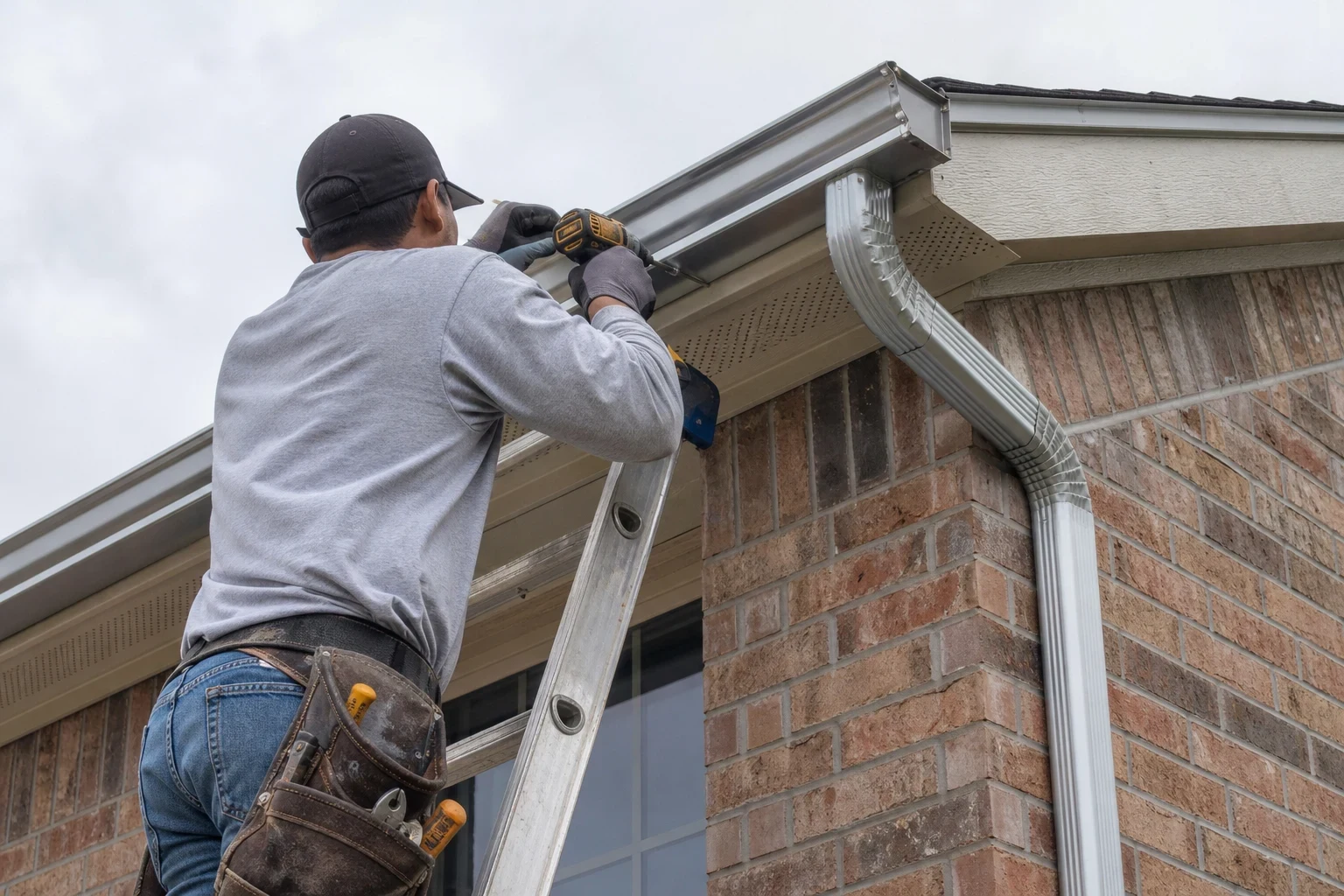
What Gutters Do for Your Home and When to Replace Them
A gutter system has one job: collect the water coming off the roof edge and move it far enough from the house that it never reaches the fascia, siding or foundation. When gutters are undersized, pitched backward or pulled loose from their hangers, water spills over the front lip or runs behind the gutter and soaks the fascia board.
Some problems are a repair: a leaking end cap, a seam that needs fresh sealant, a few hangers that have backed out. Others call for new gutters, especially when the run sags in several places, the aluminum is dented from hail, or the fascia behind it has gone soft. We tell you which one you have and why.
Most gutter jobs on a single-story house take one day. We give you that estimate up front, along with a morning or afternoon arrival window, so you know when the trucks show up and when the ladders come down.
What Our Gutter Work Includes
- Sizing to your roof
- We measure the roof area and pitch draining to each run. Steeper or larger roof planes often need 6-inch K-style gutters instead of 5-inch, because they dump more water at the edge during a hard spring downpour.
- Correct pitch
- Gutters are set to fall roughly a quarter inch for every 10 feet toward the outlet. Too flat and water sits and breeds debris; too steep and it looks crooked and overshoots the corners.
- Hidden hangers into solid wood
- We fasten hangers with screws into the fascia, typically every 24 inches or closer on long runs. Screws hold far better than the old spike-and-ferrule method, which loosens as the wood swells and shrinks.
- Downspouts that carry water away
- We place downspouts so no single outlet is overloaded, and we can upsize to 3x4 inch where a large roof plane drains to one corner. Extensions or splash blocks send the water clear of the foundation.
- Rot check behind the gutter line
- We push a probe into the fascia board to find soft, rotted wood while the old gutters are still coming down. We also make sure the drip edge metal hangs inside the back of the trough, since that overlap keeps runoff from slipping behind it.
Signs Your Gutters Need Attention
Overflow at inside corners
Water sheeting over the lip where two roof planes meet usually means the gutter is too small for that valley's flow or the outlet is too far away.
Sagging sections
A dip between hangers holds standing water and debris. The extra weight pulls more hangers loose over time.
Drips at seams and end caps
Sealant breaks down with heat and cold cycles. Steady drips at joints soak the ground in one spot and stain the siding below.
Peeling paint or dark streaks on fascia
This points to water getting behind the gutter. Left alone, the fascia rots and the gutter loses its anchor.
Soil washing out near the foundation
Trenches or bare spots under a downspout mean the water is landing too close to the house.
Shingle granules piling up in the trough
Heavy granule buildup is a roof wear signal, not a gutter problem. We will point it out, and a roof inspection can tell you how much life the shingles have left.
The Steps of a Gutter Job, Call to Cleanup
- 1
Your call and a set window
We go over what you're noticing and book a visit with a specific arrival window, so your whole day isn't spent waiting.
- 2
Measurements and a close look
We measure each run, inspect the fascia and drip edge, and mark where the downspouts sit and where their water ends up. Anything behind the gutters that needs repair, you see in photos.
- 3
Itemized estimate and a set date
Footage, gutter size, downspouts and any fascia repair each appear as their own line on the estimate. After you sign off, you get a firm install day and how long we expect the job to run.
- 4
The install
The crew takes down the old gutters, fixes fascia where it's needed, hangs and seals the new system and connects the downspouts. When rain or strong wind is forecast, we call ahead with a new date rather than leaving you to find out that morning.
- 5
Water test and cleanup
Before leaving, we run a hose into the high end of each run so you can see water travel to the outlet. The old gutters get loaded onto the truck, and we sweep the yard and beds for stray screws and aluminum scraps.
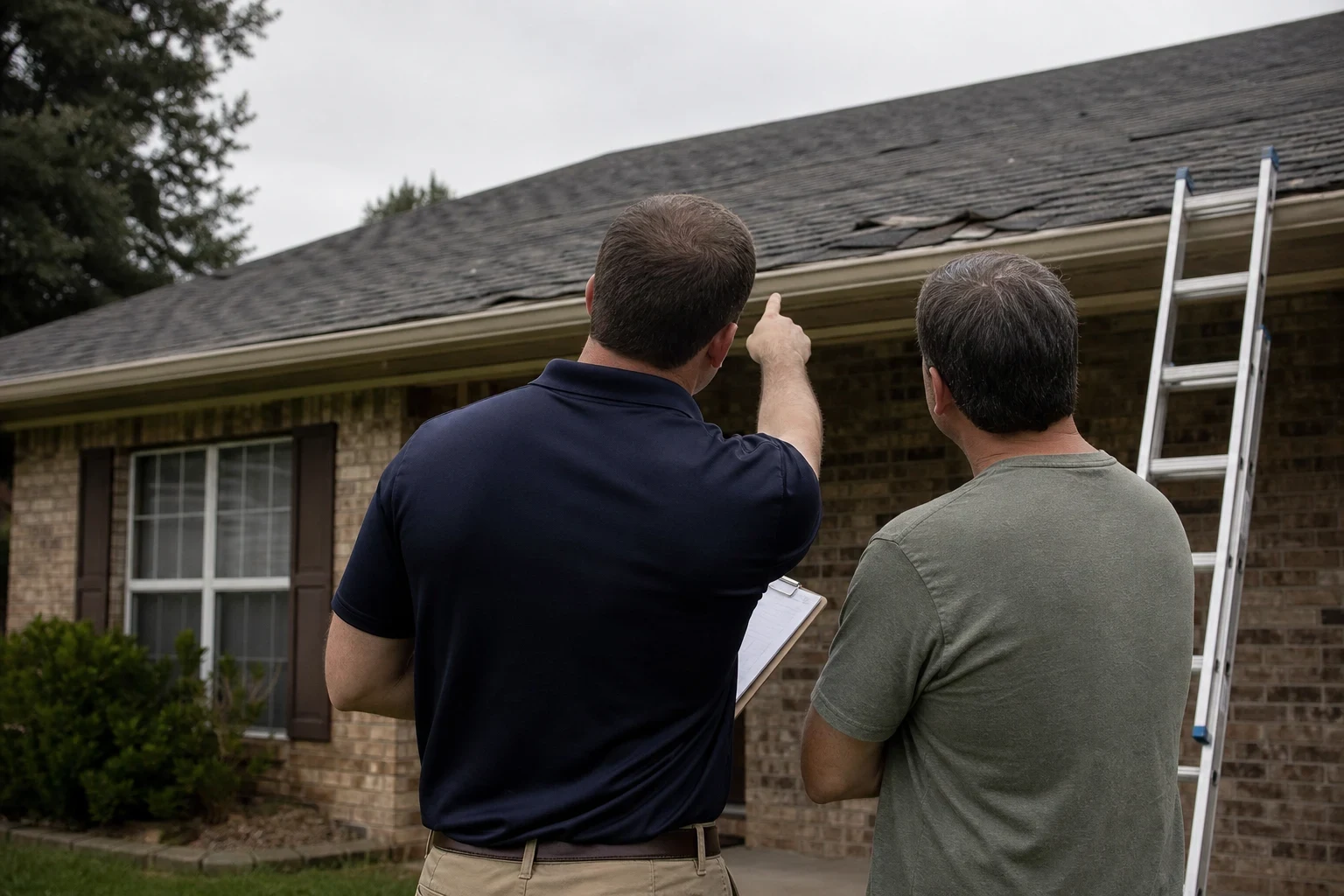
What Moves the Cost of Gutters
Two things drive most of a gutter price: total footage and the ladder work it takes to hang it. Every part gets its own line on the estimate, so nothing is bundled out of sight. The one thing that usually changes scope is rot hidden behind the old gutters, and you see photos of it before we replace any wood.
- Linear footage and stories
- More feet of gutter means more material and labor. Second-story runs need taller ladders and more setup time.
- Gutter size and material
- Six-inch gutters and heavier-gauge aluminum cost more than standard 5-inch, but they handle bigger roof planes and resist denting.
- Downspouts and extensions
- Each added downspout, upsized outlet, or extension to move water past a walkway or bed adds to the total.
- Fascia repair
- Rotted fascia has to be replaced before new gutters can hold. The amount depends on how far the water damage runs.
- Removal and guards
- Taking down and hauling away old gutters is part of most jobs. Gutter guards, if you want them, are priced as a separate line.
Common Gutter Questions
Something not covered here? (572) 231-8302
How much time does a new gutter install take?
A single-story house is usually finished in a day, and plenty of bigger or two-story houses need one to two days. Fascia work can stretch that. We tell you how long to expect when we book your install, so you can plan your week.
Should I get 5-inch or 6-inch gutters?
That comes down to roof area and pitch more than the size of the house. A long, steep plane emptying into one run pushes a lot of water to the edge quickly, and 5-inch gutters may spill over at the corners. We measure and suggest the size that can really handle your runoff.
Is fixing my gutters an option instead of replacing them?
In many cases, yes. Resealing seams, new end caps, rehanging loose runs and correcting the pitch are all routine fixes. When the aluminum is heavily dented or sags in lots of spots, replacing it usually costs less in the long run, and we'll tell you why.
What if rain is coming on install day?
We keep an eye on the forecast in the days leading up to your job. If rain or wind would make the work unsafe or sloppy, we call you in advance with a new date instead of arriving and quitting partway through.
Do gutters go on before or after a new roof?
If you're replacing the roof soon, doing the gutters after or at the same time usually makes more sense, since the drip edge gets replaced along with the roof. We can schedule both so the drip edge overlaps the new gutters properly.
Do gutter guards pay off?
They do the most good on houses under trees that shed leaves or seed pods. You'll clean less often, though they still need a look now and then. We can quote them as an add-on and let you decide.
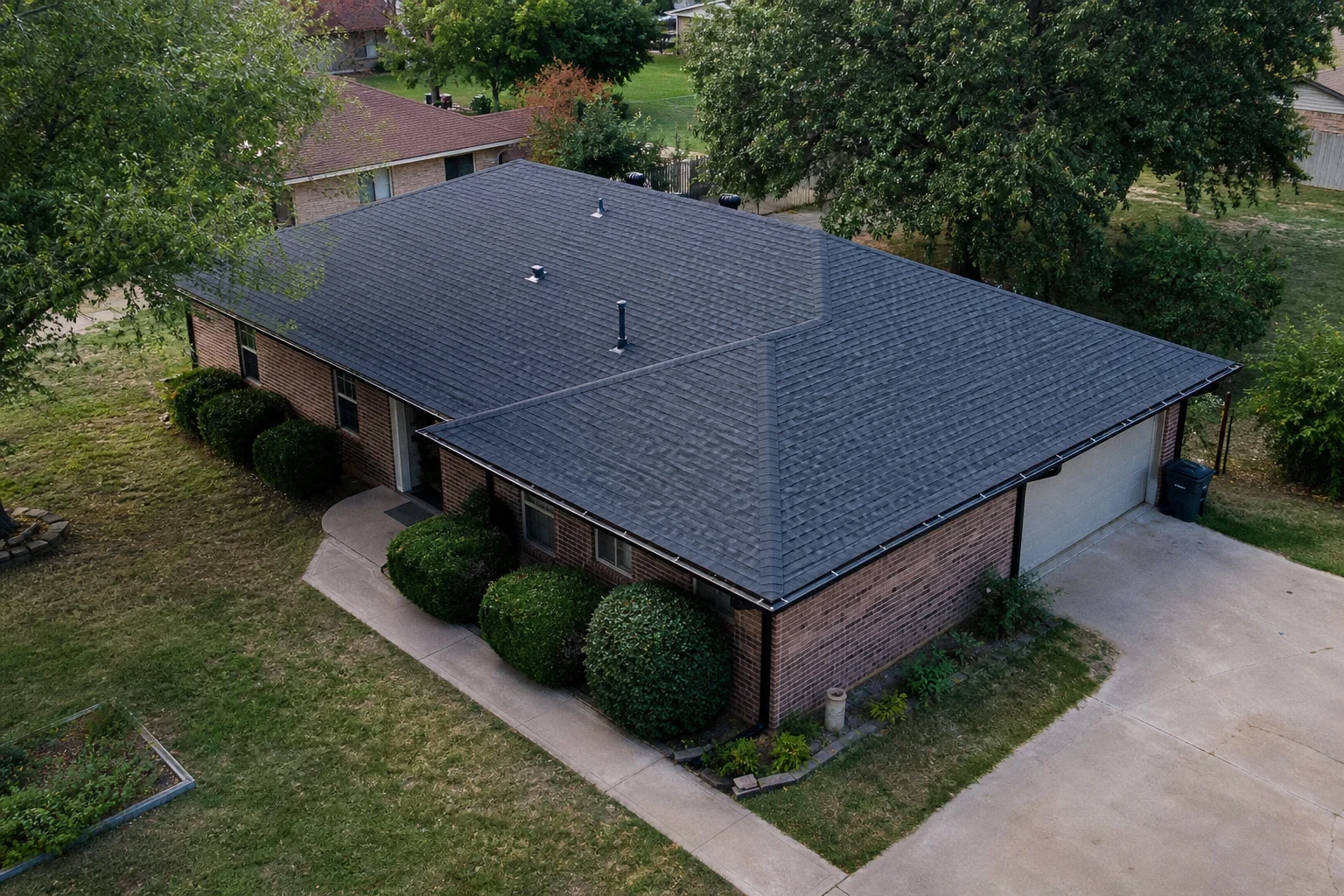
Get Your Gutters Draining the Right Way
Tell us what you are seeing at the roof edge. We will set a visit window, measure, and give you a written estimate with an install date you can plan around.