ServicesRoof Inspections
Roof Inspections in Piedmont
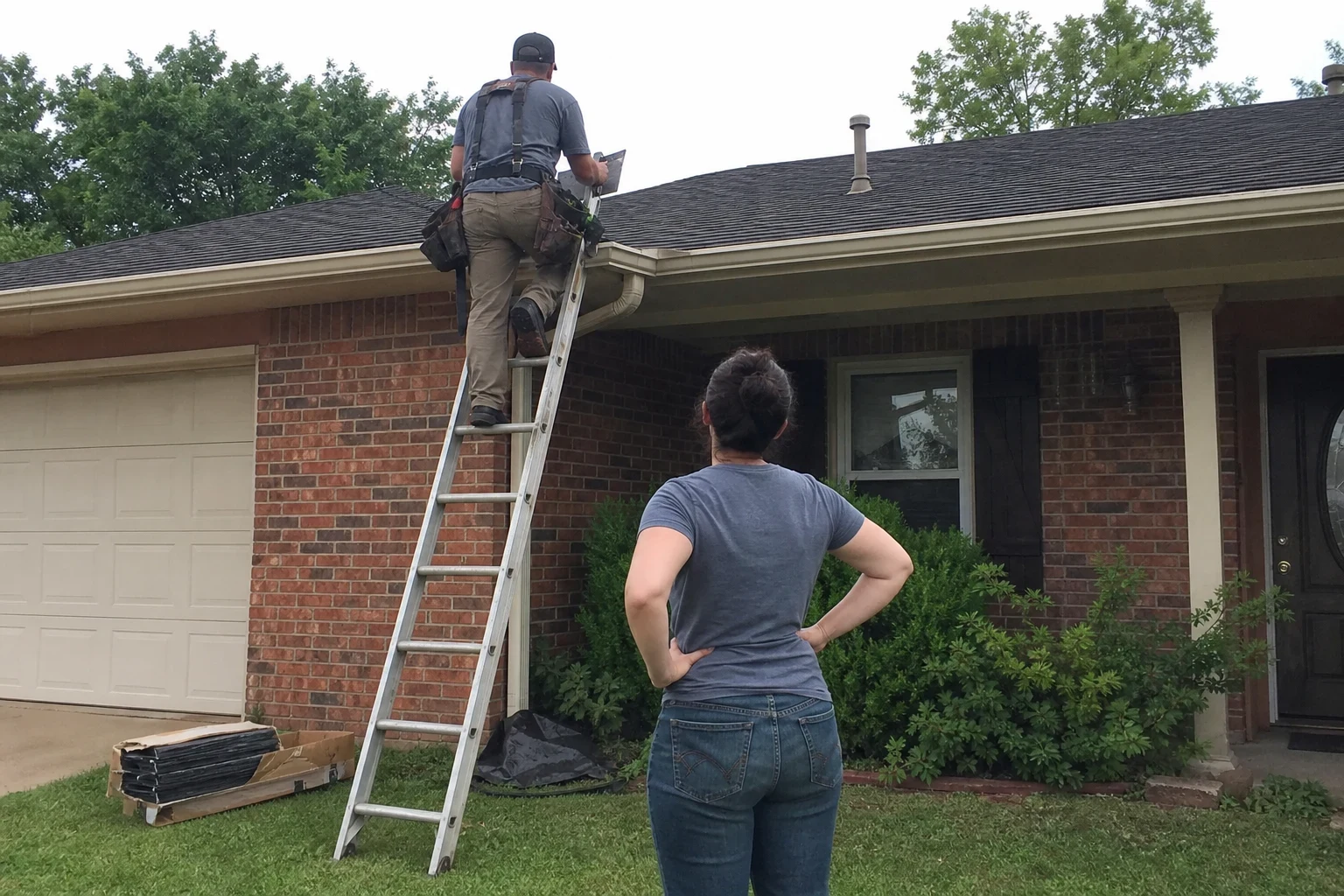
We check your roof from the drip edge to the ridge and from the attic side, then show you what we found in photos. You get an arrival window ahead of time, and if weather moves the visit, we tell you before you rearrange your day.
What a Roof Inspection Tells You
A roof inspection is a structured look at every part of the roof system: the shingles, the underlayment you can see at the edges, the metal flashing, the pipe boots and vents, the decking, and the attic that sits under all of it. The goal is a clear picture of condition, so you know whether your home needs nothing, a small fix, or planning for a bigger job.
Homeowners usually book one when a property is changing hands, once hail or high wind has come through, when the shingles reach about 15 years old, or when a ceiling stain shows up and they want the cause. Spring storms in central Oklahoma wear hard on asphalt shingles, so late spring is a common time to have the roof looked over.
We schedule inspections for a specific arrival window, and we keep you posted the same day if a job or a storm pushes it back.
What We Check on Your Roof
- Shingle surface and granule loss
- We look for bruised or cracked shingles, bare spots where granules have washed off, and tabs that have lifted or creased in wind. Granule loss exposes the asphalt to UV, which is what makes shingles brittle and short-lived.
- Flashing and penetrations
- Step flashing at walls, chimney flashing and counterflashing, valley metal, and the rubber boots around plumbing vents. Cracked pipe boots are one of the most common sources of slow leaks we see.
- Edges, ridge and ventilation
- We check drip edge, ridge cap, and exhaust and intake vents. Blocked soffit vents or missing ridge venting trap heat and moisture, which ages shingles from below.
- Attic and decking
- From inside the attic we look for daylight at nail lines, water staining on the decking, damp or compressed insulation, and mold on the sheathing. Soft spots felt underfoot on the roof get noted too.
- Gutters and drainage
- Clogged or sagging gutters push water back under the drip edge and onto the fascia. We note pitch, loose hangers and downspouts that dump water against the foundation.
- Photos and a written summary
- You get pictures of each problem area and a plain list sorted by urgency, so you can see what we saw without climbing a ladder.
When It Makes Sense to Book an Inspection
Hail or strong wind came through
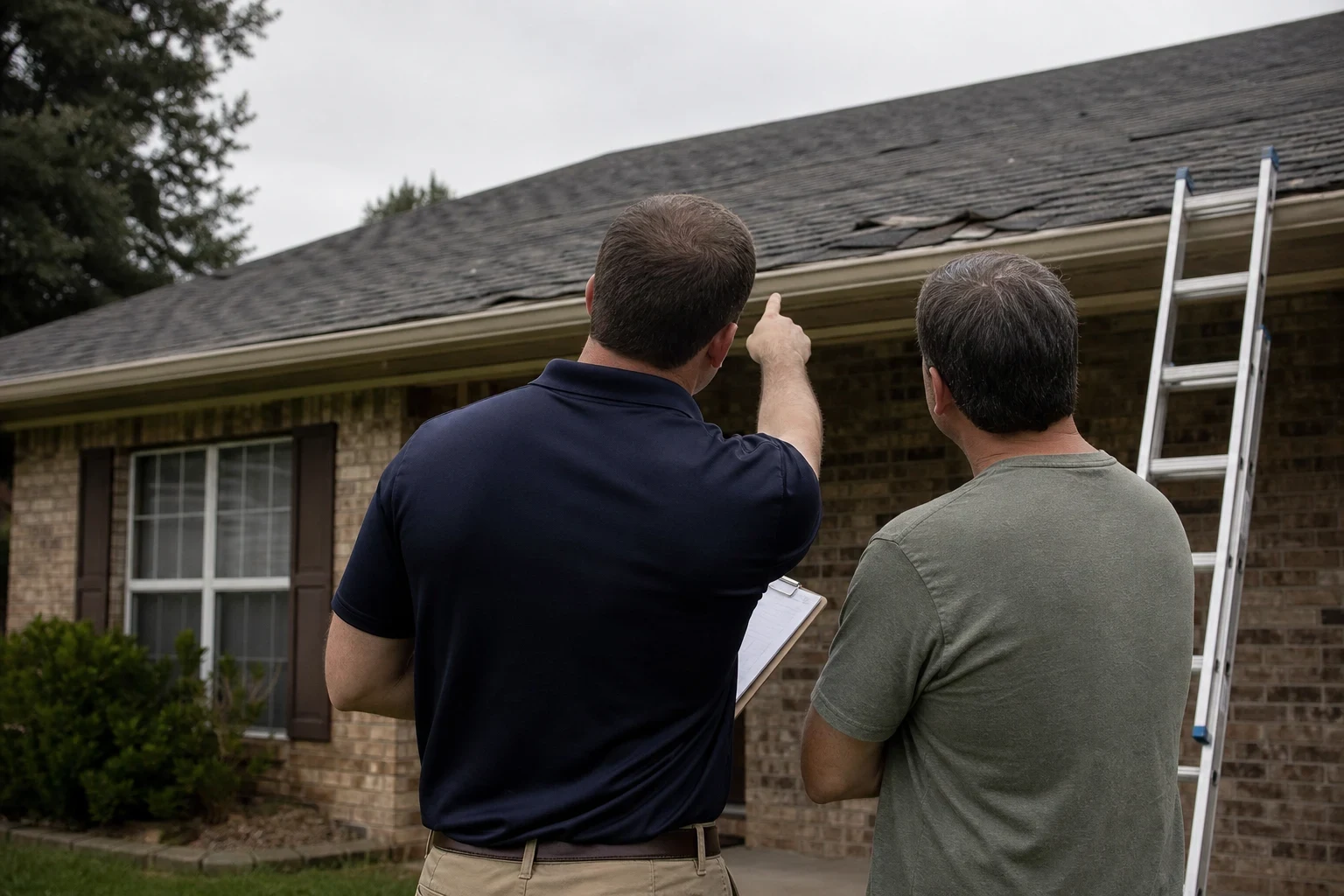
You often can't see hail bruises from the yard, yet they fracture the shingle mat below the surface. High wind can break the seal on tabs, which then lift in the following storm.
Grit building up in the gutters
A thick layer of dark grit in the gutters or at the downspout outlets tells you the shingle surface is wearing away.
Stained ceilings or a musty attic smell
Water tends to run along a rafter before it falls, so the stain usually isn't directly below the hole. An inspection follows it back to where it starts.
A purchase, sale or new policy
A written condition report gives you footing in negotiations and covers the questions an insurer may raise about the roof's age and shape.
Your roof is over 15 years old
An aging asphalt roof can look fine from the curb even after its seal strips and pipe boots have quit. An inspection lets you plan ahead rather than scramble.
How the Inspection Day Runs
- 1
We set the window by phone
When you call, we agree on a day and an arrival window that fits your schedule. If rain, high wind or a running job will push us late, you hear from us before the window opens, not after.
- 2
Exterior walk and ladder setup
We walk the perimeter first to look at gutters, fascia and the roof lines, then set a ladder on stable ground away from your plants and walkways.
- 3
On the roof, then in the attic
We work the slopes in order and photograph each issue where it sits. If you can give us attic access, we check the underside of the decking and the ventilation. Most visits take about an hour, longer on steep or cut-up roofs.
- 4
Findings explained before we leave
We go through the photos with you, say which items need attention now and which can wait, and answer questions. If work is needed, we explain whether it is a roof repair or something larger, and why.
What Sets the Price of an Inspection
Cost comes down to how much roof we need to cover and how easy it is to get to. You hear the price over the phone when you book, so nothing changes once we show up. If we find work that needs doing, that estimate is separate and itemized in writing.
- How big and cut-up the roof is
- Each added slope, valley, dormer or penetration brings more flashing and seams to look over, and that adds time.
- Slope and number of stories
- A steep or two-story roof calls for more safety setup and slower footing once we're up there.
- Getting into the attic
- An open hatch makes the inside check fast. A cramped crawl space or blown-in insulation covering the joists means a slower, more careful look.
- How detailed the report is
- Most people only need the standard summary. A more complete photo report for a home sale or an insurance file takes extra time to put together.
What People Ask About Roof Inspections
Something not covered here? (572) 231-8302
Does someone have to be home for the inspection?
Not for the outside portion. If you want the attic looked at, someone needs to let us in, and we like to show you the photos when we finish. If you're away, we can review what we found with you over the phone.
How frequently should a roof get inspected?
For an asphalt roof, once a year is a good starting point, along with a look after hail or high wind. Roofs older than 15 years gain the most, since that's about when seal strips and pipe boots start giving out.
What if you spot storm damage?
We take photos and tell you what type of damage it is. If you choose to file a claim, we can explain how claims typically go and what our storm damage repair work covers, but the coverage call belongs to your insurance adjuster.
Is the inspection really a sales pitch for a new roof?
It shouldn't be, and with us it isn't. Many roofs we check need nothing at all, or just a split pipe boot and a few loose shingles fixed. We only bring up roof replacement when the photos show worn shingles and broken seals on most slopes, and then we show you why a patch wouldn't last.
What if the weather turns on inspection day?
We stay off wet or icy roofs, since they're dangerous and can hide damage. If conditions shift, we reach out before your window opens and give you the next day that works.
Find Out Where Your Roof Stands
Tell us when works for you and we will give you a real arrival window. You will leave the visit with photos and a clear order of what to do next, if anything.